How to Develop Silent Confidence in Exclusive Nightlife Environments
Silent confidence is the kind of presence that doesn’t ask for permission, approval, or validation. It’s not loud. It’s not performative. It’s the quiet certainty that you belong wherever you are—and you don’t need to prove it to anyone.
In exclusive nightlife settings, this type of confidence matters more than anything else. When the room is filled with accomplished, well-connected people, loud posturing reads as insecurity. Silent confidence, on the other hand, reads as competence.
What Silent Confidence Actually Is
Silent confidence is the ability to move through a room with grounded composure. No proving. No seeking reactions. No broadcasting status.
You’ve probably seen both sides of this.
Someone walks into a high-end venue scanning the room, looking for approval, adjusting their posture, over-explaining why they’re there. Everyone notices.
Then someone else walks in calmly—no performance, no overthinking, just presence. That person blends seamlessly because they’re not trying to “get accepted.” They already operate from the assumption that they belong.
Exclusive spaces amplify this difference. In these environments, everyone already has credentials, money, or connections. What stands out is not what you show—it’s what you don’t need to show.
Silent confidence is conveyed through stillness, restraint, and a level of self-assurance that doesn’t rely on external cues.
Silent Confidence vs. Regular Confidence
Most people think they’re confident, but their confidence is dependent on feedback. They need compliments, recognition, enthusiasm, or proof that they’re doing well.
Silent confidence isn’t reactive. It doesn’t need confirmation.
Regular confidence says:
“I hope I do well.”
Silent confidence says:
“I’ve handled harder things. I’ll be fine here.”
In nightlife, you see this difference immediately. Loud confidence tries to influence the room. Silent confidence simply influences by existing.
Why Exclusive Environments Expose Insecurity
High-end nightlife environments can destabilize people because:
-
Everyone looks successful
-
Everyone seems connected
-
You can no longer differentiate yourself through achievement
-
Your normal social “advantages” don’t work
This is where many people fall into validation-seeking behavior—explaining their job title, telling stories that feel forced, name-dropping, or trying too hard to impress.
The more you try to prove you belong, the more obvious it becomes that you don’t feel like you do.
Exclusive venues are designed around unspoken rules, subtle hierarchy, and an assumption of competence. If your identity depends on outperforming others, you’ll struggle in spaces where everyone is already performing at a high level.
How to Build Silent Confidence (The Real Way)
Silent confidence is never built through hacks or behavioral tricks. It has a foundation.
1. Become Competent at Something Meaningful
The fastest route to quiet confidence is being genuinely skilled—at work, a craft, a discipline, or a passion. When you know you’re competent, you know what it is like to be in a flow state. You don’t perform. Your presence communicates enough.
You don't need to be the best—just undeniably good.
2. Be Curious, Not Performative
Shift from:
“What do they think of me?” → “What can I learn about them?”
Curiosity removes self-consciousness.
People feel more comfortable around you.
Conversations feel natural instead of strategic.
Quiet presence comes from not needing to defend your ego.
3. Become Comfortable With Silence
Most people fear silence because they interpret it as social failure.
Silent confidence embraces it.
Stillness communicates stability.
In VIP settings, being comfortable doing nothing—no nervous joking, no filler talk—signals maturity and self-possession.
4. Keep Promises to Yourself
Internal respect is built through self-discipline.
Every time you follow through on something you told yourself you’d do, you reinforce your self-image.
Real confidence is built through daily actions, not nightclub moments.
When Silent Confidence Works (and When It Doesn’t)
Silent confidence shines in settings where people value substance over theatrics:
-
exclusive nightlife
-
private clubs
-
executive or high-level business events
-
intimate social environments
-
situations where relationships matter
But it's not ideal everywhere.
For example:
-
networking events require more open energy
-
presentations need outward projection
-
casual socializing benefits from warmth and expressiveness
The key is modulating your presence without compromising your internal stability.
Where to Practice
Build gradually:
-
Start with everyday moments—coffee shops, errands, casual social events
-
Move into upscale environments—art openings, quality lounges, curated meetups
-
Eventually test yourself in exclusive nightlife spaces
Confidence grows through exposure. Your nervous system has to learn that these spaces are safe.
Common Mistakes That Undermine Silent Confidence
Explaining Why You “Belong”
Over-explaining your presence is insecurity disguised as logic.
People with silent confidence never justify themselves.
Trying to Impress Instead of Connect
High-status environments expose try-hard behavior instantly.
People respect restraint far more than performance.
Imitating Confidence Without Depth
You can mimic confident behavior, but without internal foundation, it collapses under pressure.
You need real competence and real self-respect—not an act.
How Long Does Silent Confidence Take to Build?
Most people feel internal shifts within 3–6 months of consistent work. However, confidence compounds like interest. Small actions, repeated consistently, turn into major social transformations. It is a social skill that is developed like a muscle, and needs to be used on a regular basis, or it will be lost.
What About Appearance?
Appearance matters, but only at baseline. You don’t need designer labels—just clean, intentional presentation that fits the environment.
Overdressing is insecurity. Underdressing is incompetence. Aim for congruence.
Clothing should support your presence, not substitute for it.
Conclusion
Silent confidence becomes much easier to build when you follow a clear, structured system.
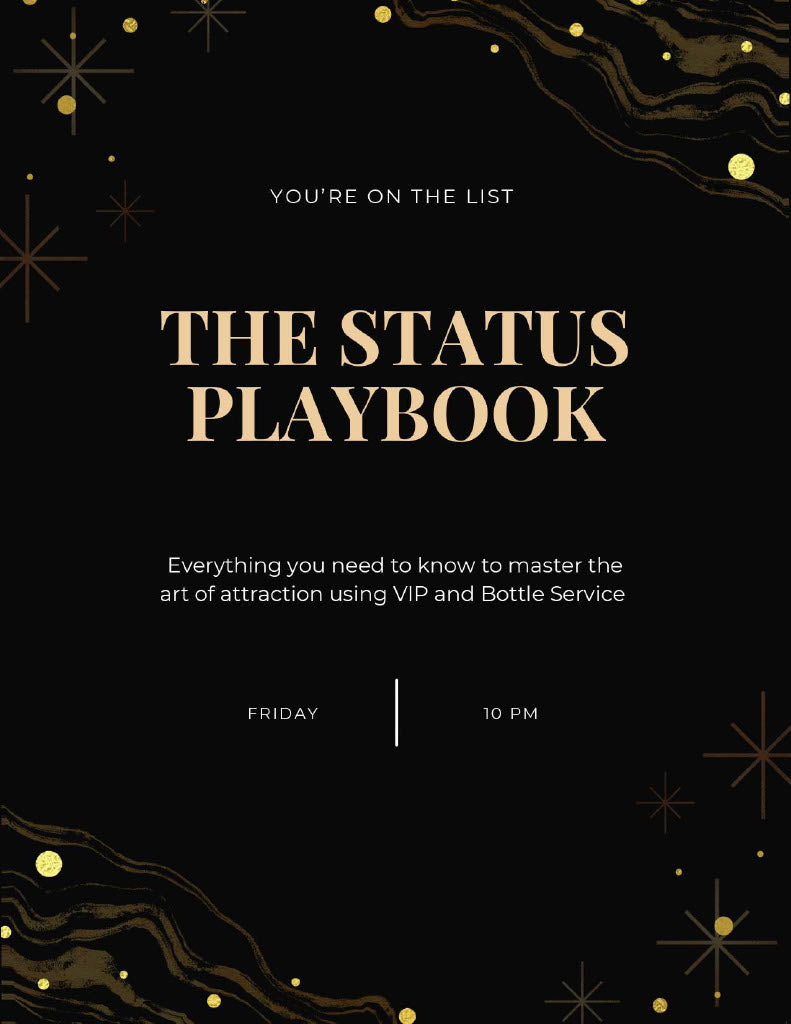
The Status Playbook teaches the exact frameworks—from venue selection to social architecture to psychological positioning—that allow regular men to move comfortably and intentionally in exclusive nightlife settings.